Firstly, Neolithic people were Homo Sapiens, just like us. They weren’t some sort of ancient thugs, incapable of rational thought. Given a modern education, there’s no reason to believe they would have fared any worse than you or me. We’d have recognised a lot about their lives, but we would have struggled with the sheer amount of hard work that was required to live a ‘civilized’ life.
Housing.
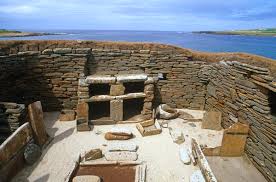
The style of housing would have varied from place to place. In Orkney, where the sedimentary rock splits easily, houses had stone walls, and some had huge slabs of stone as roofing slates. In other places, wooden frames would have been the norm. Low walls may have been wattle and daub, woven ‘basket’ type walls, coated in mud. Roofs would likely have been some form of thatch, either from naturally occurring reed, or straw from their grain crops.
Floors would have been beaten earth, and the smoke from the central hearth would filtered out through the roofing material, or through a smoke hole. In Orkney, they even built furniture from the abundant stone.

Food.
The Neolithic, or New Stone Age, marked the introduction of agriculture. No longer did the population spend all their time hunting and gathering. They farmed the land, growing crops and domesticating animals.
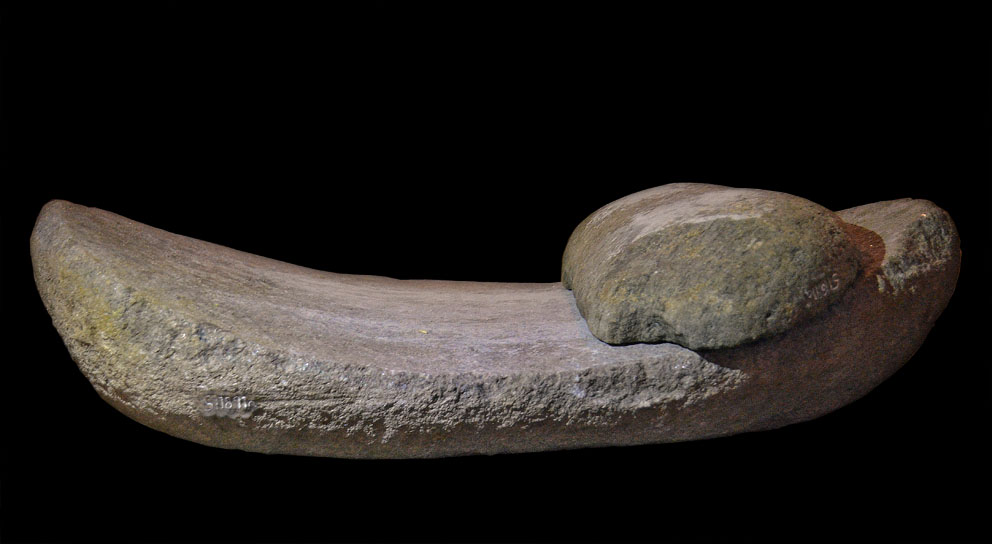
Their main crop was grain, and archaeological evidence shows that this would have been ancient strains of barley or wheat. Tilling would have been done by hand and, though we don’t know how they processed and stored their grain, it would have been labour intensive. Flour would have been ground between two rocks, and quern stones, ground away by repeated use, have been found at many sites. The resulting flour would have contained a quantity of rock dust, which would have worn your teeth away quickly.
Neolithic people kept cattle and pigs, but evidence from bones found at archaeological sites show that they still hunted wild animals too. Wild boar, deer, and Aurochs, giant wild cattle, also formed part of their diet. There is no evidence that our ancestors kept sheep, nor that they utilised horses for riding or for draught animals.
We don’t know that they grew vegetables, probably relying on foraging to meet their needs. There is some evidence that they grew flax, though whether for its seeds of for fibre to make linen is not known.
So, a day in their lives may have included digging the fields, sowing, reaping, threshing or winnowing grain. They would have ground grain, butchered meat, cooked over an open fire, and eaten from wooden or earthenware bowls.
Well, that’s exhausted me!
Thanks for reading.
D J Eastwood.
 The Apprentice Tattoo