Time…

Our lives today revolve around time. We’re always looking at the clock, wondering if we’re late or early. Figuring out if we have time.

Our Neolithic ancestors must have had a very different concept of time. They would have had busy times in their calendar and quiet times. The spring would have been hard work, getting the land cultivated, possibly using wooden tools or picks made of deer antler. Once the grain is sown, though, there’s a lot less to do. Likewise, the harvest would have been a rush to get the ripe grain cut, stacked, and protected from the winter weather.

It would have been a busy time after they slaughtered an Ox, or the hunters brought in a big kill, perhaps a deer or an aurochs.

There would have been quieter times, too, but none of it would have been dictated by the clock.

They could push a stick into the ground and watch the shadow it cast slowly turn sun-wise, but it didn’t rule their day.

The Greeks’ first water clocks were still 2000 years in their future, and the first mechanical clocks another 1500 years after that. Their important markers of time were, the year, the moon (month), and the day. There was dawn, noon, sunset, and that was it.

We know they had time to spare, though.

A civilisation that worked non-stop would have no time for luxuries. Yet, they found time to decorate their pottery with beautiful patterns, time to weave cloth and cure leather. They had time to carve intricate stone balls, ornaments, for no practical purpose has been identified for them.
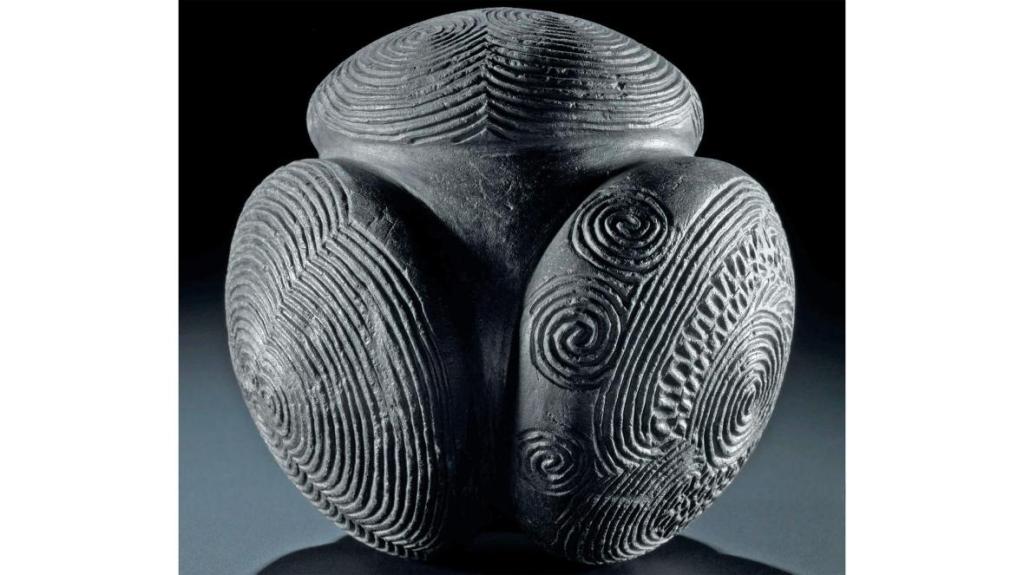
Image: National Museums Scotland.

Most of all, they had time to get together and pool their labour to build immense circles of stone.

Stonehenge is, perhaps, one of the last of the megalithic structures to be built in Britain. Its huge dressed sarsen stones, placed in a circle, with the massive capstones set on the top, symbolises the most outstanding Neolithic achievement. Yet, its purpose was, in part, to mark time.
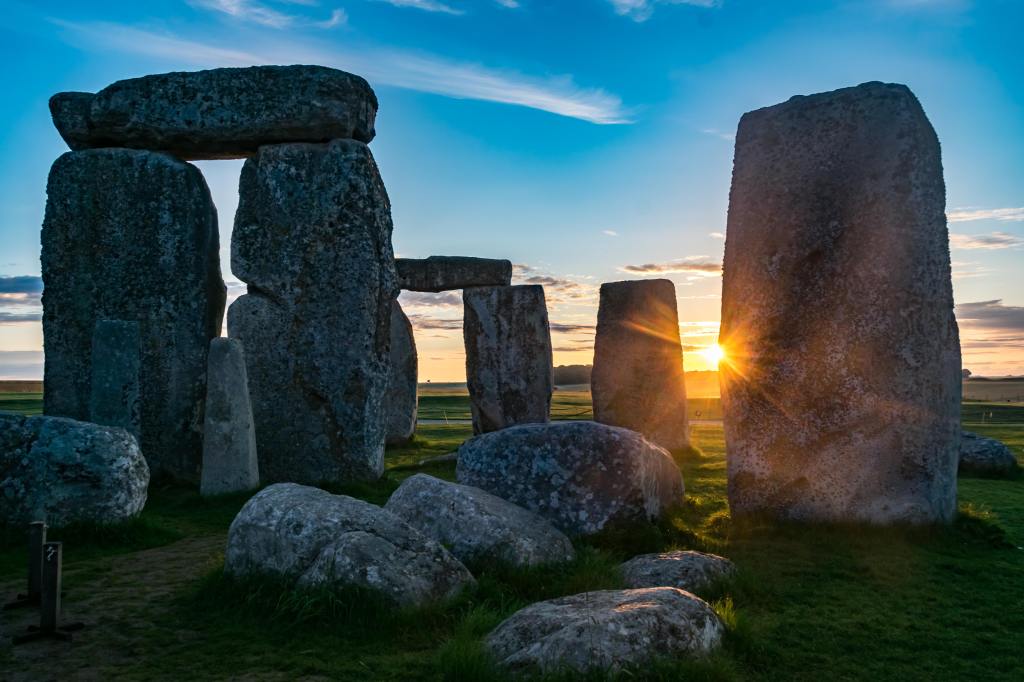
Photo by Ankit Sood on Unsplash

There are clear alignments that point directly to the midsummer sunrise and, in the opposite direction, to the midwinter sunset — important points in their calendar.

Now, It’s time for me to feed the poultry, then there’ll be time to read for a while before dinner.

I hope you’ve got time to do what you enjoy today.

Until next time,

D J Eastwood

Oh, by the way, you’ve all seen this offer, I know, but I’ll include a link to this month’s promotion as it ends in just over a week.

It’s a Fantasy & Science Fiction Giveaway! Take a look. There are over 160 titles, and they’re all FREE!

My own offering, Talisman of Fire, is in there, so if you haven’t got your copy yet, dive in. You may find your next favourite author here.

PS. There’s also the chance to win 50 Amazon bestseller eBooks.

Click HERE to take a look.

Spring is coming…

First, my apologies if you’re in the southern hemisphere where, in fact, autumn is coming… but I’ll let you use your imagination.

The cycles of the year must have been significant to our ancient ancestors. Their entire lives revolved around the seasons. In summer, the crops would grow, livestock would be well fed, and food plentiful. As autumn approached, they would gather in the grain harvest, and they might think about preserving food. The wheat or barley would be stacked and covered with thatch, ready for threshing and grinding as they needed it. Berries could be dried for storage, and surpluses of meat either salted or dried into jerky. They would turn the summer glut of milk into cheese to eat through the colder months too.

As winter approached, and stock feed and grazing became more scarce, the final animals would be slaughtered, and the tribes would settle in for the cold months. It wouldn’t be practical to travel far when the weather was cold, so they’d have been confined to their home villages. Houses varied in size, but many were roundhouses little more than 5 metres (16 feet) in diameter.

Beautiful, but there’s nothing to eat here… Photo: Terence Starkey at Unsplash

We find spring’s new growth to be a beautiful time, but our ancestors may not have seen it like that. This was the hungry gap. Preserved food would run low. Perhaps the barley crop had not been enough, or the preserved meat had spoiled. Hunting would be an option, but even wild animals are thin and hungry in early spring. Not until roots and tuber grew, and the earliest young pigs were fit for killing, would they be able to breathe a sigh of relief.

There’s a term that I’ve heard from North America, Rabbit Starvation, that appears to come from trappers in earlier centuries. The body actually loses condition if forced to live on a pure, lean protein diet over winter. We need carbohydrates and fat in our diets, and winter game is short of fat. In one of my stories, the main character breaks open the long bones of a winter kill to get at the fatty marrow within, hoping to stave off this rare form of protein poisoning.

Photo: Gary Bendig at Unsplash

Our lives now have so much less in the way of cycles. Foods are available, close at hand, all year long. I remember, as a child, that eggs were much rarer and more expensive in the winter months. Now the hens have electric light to fool them into laying whenever the farmer wants them to.

Next time you go shopping for food, think about which foods on display are produced in your area and in what season. That way, you’ll get some idea of how limited our Neolithic cousins’ diets might have been.

I’ve got a new promotion of free books for you this month. March Forward is a free book giveaway with over 160 titles available. Click on the link to look through the array of fantasy and sci-fi stories on offer.

But that’s not all! There’s also the chance to win 50 Amazon best-seller fantasy titles too. Take a look now.

March Forward: Fantasy & Science Fiction Giveaway.

Until next time, take care.

D J Eastwood