The stone age. It invokes a picture of primitive humans hitting things with rocks. In fact, the term ‘stone age’ covers a period of about 3 million years!

The Palaeolithic, or old stone age, began when hominids first picked up stones to use as tools. First, they would have been for breaking things; then, jagged edges would have been used as blades for knives or crude axes.
There’s a problem, though. Defining these vast chunks of our species’ history with such simple terms is misleading.
From 3 million years ago, our ancestors used stone tools, but their societies evolved over time. Stone only defined the material they used as tools in the same way we call other periods the bronze age or the iron age. Most of their lives were nothing to do with stone at all.
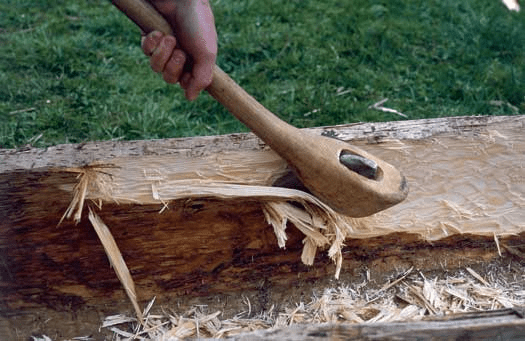
The bulk of Neolithic homes, based on archaeological finds, were constructed from wood and thatched with straw or reeds. Their furniture would have been made of timber, as might their plates and spoons. Wood, leather, fabric and plant fibres would have been far more important to our ancestors. They simply used stone to work them. The biggest problem is that these other materials are perishable.
Whereas we can find stone axes, knives and arrowheads, the wooden, leather and cloth artefacts are long gone. There are clues as to the skills of these ancient humans, though. Finds in Denmark and Scotland have shown us how the stone age peoples would have worked wood. The handles of axes, thrown into a bog or the sea, as ritual offerings, have been found. Each one beautifully carved to fulfil its purpose. A complete house door was discovered in Switzerland, crafted by the home builder 6,000 years ago.

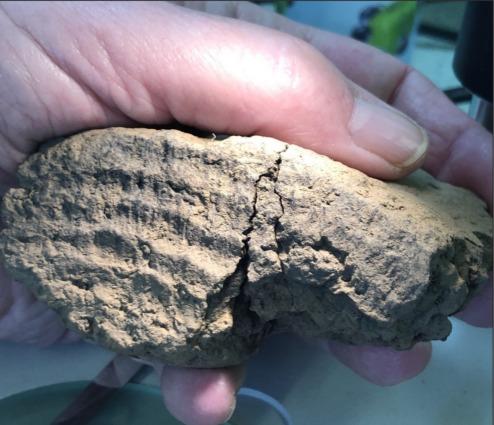
There is evidence of fabric too. Though a piece of cloth could never survive the thousands of years that separate us from them, a textile imprint on a clay pot was found at Ness of Brodgar in the Orkney Islands. It seems the potter reached inside the pot during its manufacture, leaving the imprint of his or her sleeve in the wet clay, preserved for 5,000 years for us to find.
But what of us? What defines our ‘age’? Would you call this time the technological age or the computer age? Computers and machines control most of our daily lives now. We can barely function without clocks and cars, smartphones and electricity.
We look back at our ancestors and think their society was strange and exotic. Yet, they have over 3 million years of history for their ways, and we have barely a few hundred.
Perhaps we are the strange ones!
While you’re here, why not take a look at this week’s free offers? There are over 80 titles in this Fantasy & Science Fiction giveaway.

Also, see if you missed anything from the Literary Fiction E-book Giveaway I told you about in my last newsletter. It’s still running for a short while yet.



 The Apprentice Tattoo