
The recent discovery of a log boat in the waters of the Boyne River in Ireland prompted me to investigate the likely sailing vessels of the Neolithic.
The boat, found near Drogheda, on the east coast of Ireland, was newer, between the bronze age and the middle ages. Still, the design of these ‘dugout’ boats had not significantly changed for thousands of years. Take a large section of a tree trunk, shape the outside to the hull profile you need, then spend hours painstakingly chopping out the centre with a stone axe or adze.
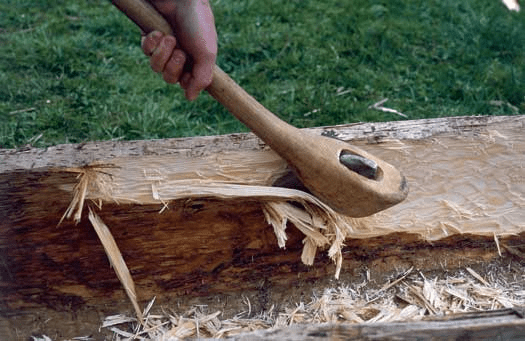
The boat you’re left with is long and narrow, with pretty poor stability, but it floats. In calm seas or inland waterways, it’s an excellent method of getting about.
The island I call home has some pretty inaccessible places. A section of the island called South Lochs was hard to reach before the building of paved roads, even though it was pretty close to the principal town of Stornoway. The residents would take a rowing boat for their journeys to the town rather than face the endless slog across rough moorland.
There is more evidence of early boatbuilding found at Broksø, Denmark. Peat digging uncovered a 3.8-metre long canoe, preserved in the bog for around 5,000 years. It’s made from an oak log, though other discoveries have revealed the use of alder and lime wood for boats too.
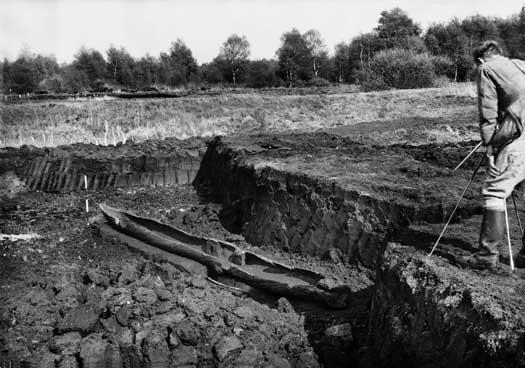
There were other options, of course. Boats can also be built from a woven wooden frame, covered in animal skins, and sealed with fat. This means a greater choice in the hull’s shape. There are traditional Irish boats, known as currachs, that were made this way.
Putting to sea in these must have been a hit and miss experience. Yet, we know our ancient ancestors travelled this way by the apparent trail of a trade route up the west coast of Britain. Flint tools from Grimes Graves, where up to 18,000 tonnes of flint were extracted in the Neolithic period, have been found throughout Britain. These were traded and must have been transported by boat to many of the archaeological sites where they were recovered.
Today, I think most of us would think long and hard about taking to the sea in a rowboat to trade with our neighbours. Maybe our ancient ancestors were braver than we believe.
While you’re here, take a look at this new promotion, a literary fiction e-book giveaway, available HERE.

Until next time…
D J Eastwood
 The Apprentice Tattoo